
Frequently Asked Questions
you will find brief answers to the questions most frequently asked of FCUSA.
-
As any dog or cat owner knows, a healthy coat is one of the best indicators of their pet’s health. And since a fur farmer’s livelihood depends upon producing top-quality fur, nothing is more important to him than the health of his animals.
Raising furbearers is a challenging profession, and only people with expert knowledge of their welfare needs will succeed. These are live animals which must be cared for every day – weekday, weekend or public holiday.
Farmers without a real interest in their animals’ welfare will soon suffer themselves in the form of poor financial return.
See also AMVA Guidelines on Euthanasia.
-
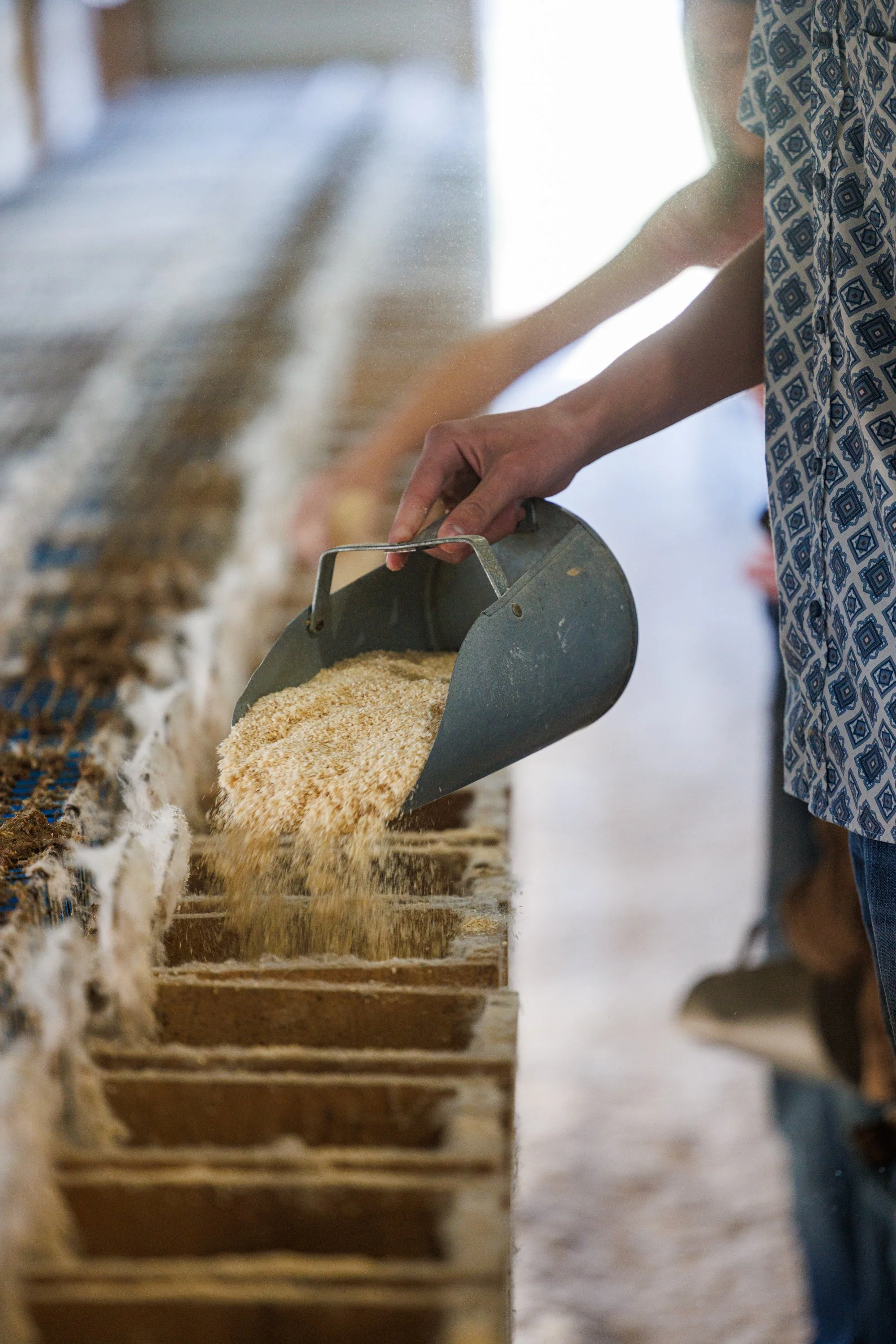
Farmed mink primarily eat the by-products (or waste) from the production of food for humans, in particular such high-protein ingredients as dairy, fish and meat.
In 2009, US mink farmers produced 2.86 million pelts. Since one farmed mink eats about 140 lbs during its life, all those mink consumed 400,400,000 lbs – or 200,200 short tons – of waste. A fully laden Boeing 747 weighs 900,000 lbs, and US mink eat the equivalent of 445 of them every year!
Looked at another way, a full-length mink coat containing 40 pelts represents 5,600 lbs of waste, and a jacket made of 20 pelts, 2,800 lbs.
-
Mink have a thick coat of fur and a thick layer of subcutaneous fat, disguising the fact that they are really quite skinny – not much more substantial than rats!
As the price of biodiesel equipment falls, and petrochemical fuel prices remain high, more farmers are investing in equipment to convert fat to energy for on-farm use. However, currently, the best value for mink fat is realized by refining it to cosmetic grade oil for use in hypo-allergenic facial oils and cosmetics.
The oil is also used to condition and preserve leather. Mink oil can be purchased at some pharmacies, on the Internet.
Mink carcasses are rarely eaten by humans as the scent gland gives the meat a distinctive flavor which most people don’t enjoy. However, they are not wasted. Some farmers trade them for fish offal with fishermen who use them as crab bait. Crabs love mink meat, but seals hate it!
Other farmers give the carcasses to people who raise birds of prey or run wildlife preserves, zoos or aquariums. Yet others use them to make organic compost. Or they may be bought and rendered down to provide raw materials for a wide range of products, from tires and paint to makeup and organic fertilizers.
-
Livestock on American mink farms are domesticated descendants of wild animals, some caught almost a century ago. They have been selectively bred to be healthy and thrive in a farm environment, and to provide the most desirable fur quality and a variety of colors. This is the same way all breeds of domestic livestock, pets, animals used in medical research, and animals in zoos and aquariums, have evolved and are continuously improved.
As with sheep, cows and pets, farmed furbearers are totally dependent on man for their needs, and rarely survive long if released into the wild.
The status of farmed mink as domesticated animals is also recognized in US law (see US Code Title 7, Chapter 7, § 433).
-
No. Domesticated mink do not make good pets. If you have heard that mink make good pets, it’s misinformation.
While dogs and cats have been selectively bred for pet-quality traits over thousands of years, domesticated mink are livestock that have been bred for clothing and oil and life on a farm.
Domesticated mink retain many of their aggressive traits. Mink have very sharp teeth and claws and can inflict nasty injuries on their handlers. They are also carnivorous and so need a high protein diet. Given the chance, mink will eat your pet guinea pigs, rabbits and goldfish.
We only know of one owner who successfully raised a mink in his home, and even he has been unable to reproduce that success with other mink from the same and subsequent litters.
Mink have not been selectively bred for pet-quality, so FCUSA does not recommend you attempt to hold and raise them as pets unless you are willing to give, at the minimum, 20 years to the project.
If ferret-like pets are what interest you, consider a ferret (if ownership is legal in your state). Ferrets have been raised for pet quality for thousands of years. That said, they are still not for everyone. Dogs and cats are infinitely better choices.
-
From pelt production, to dressing, design and manufacturing, every stage in the production of a fur coat is labor-intensive and requires skilled craftsmanship.
In all, it takes about one full year from the time a trapper or farmer sends his furs to auction to the time the finished fur garment is ready for the consumer. Production of the finished garment alone may take 40 hours, which is longer than it now takes to make a car! It is this skilled labor that is the major component in the final cost of a fur garment. See Fur: The Fabric of a Nation, produced by the Fur Council of Canada.
-
Most mink pelts are traded through auction houses (see above), where they have been graded by highly trained professionals.
A layperson would have a hard time matching their skills, but for general pointers on grading your own mink, see Fur Farming Special Feature: Grading Mink.
For other types of fur, see Fur Types in Brief.
-
Contact Fur Commission USA for further information, or mail us your request on the official letterhead of your company or educational institution, accompanied by a brief C.V.
FCUSA will then forward your request to our Research Committee for their consideration.
-
Since most fur farmers work at home and the farm address is their home address, FCUSA does not release their addresses to the public.
We are happy to contact them on your behalf. Please contact us and we will pass your information on to the appropriate parties.